
6× More Orders by Keeping Ads Live During Peak Hours

The problem
Before Sapyon AI, their best month was capped at 1,884 orders and ₹15.7L in ad sales. Daily budgets often ran out before evening, when many people shop. When they tried to increase budgets to capture more sales, ads kept spending during dead hours when clicks got expensive and few people bought.
Average CPC rose from about ₹7 to about ₹17, and weaker months stopped making a profit entirely. Checking reports once a day was simply too slow to fix this.
What they did
They onboarded to Sapyon AI to watch spend and performance hour by hour. Automatic budget rules kept ads running during hours when shoppers actually bought, and pulled back when CPC spiked.
They started with their top campaigns, setting rules against their baseline target, then rolled the automated pacing across the rest of the speaker catalog.
What changed
After Sapyon AI, the results were immediate and massive. By keeping ads funded at the right hours and cutting dead-hour waste, they scaled to 11,188 orders and ₹84.7L in monthly ad sales, a 5.4× revenue growth.
For brand owners, the takeaway is simple: you are leaving money on the table if your ads go dark during peak hours. Capturing that demand requires automation, not midday spreadsheet checks.
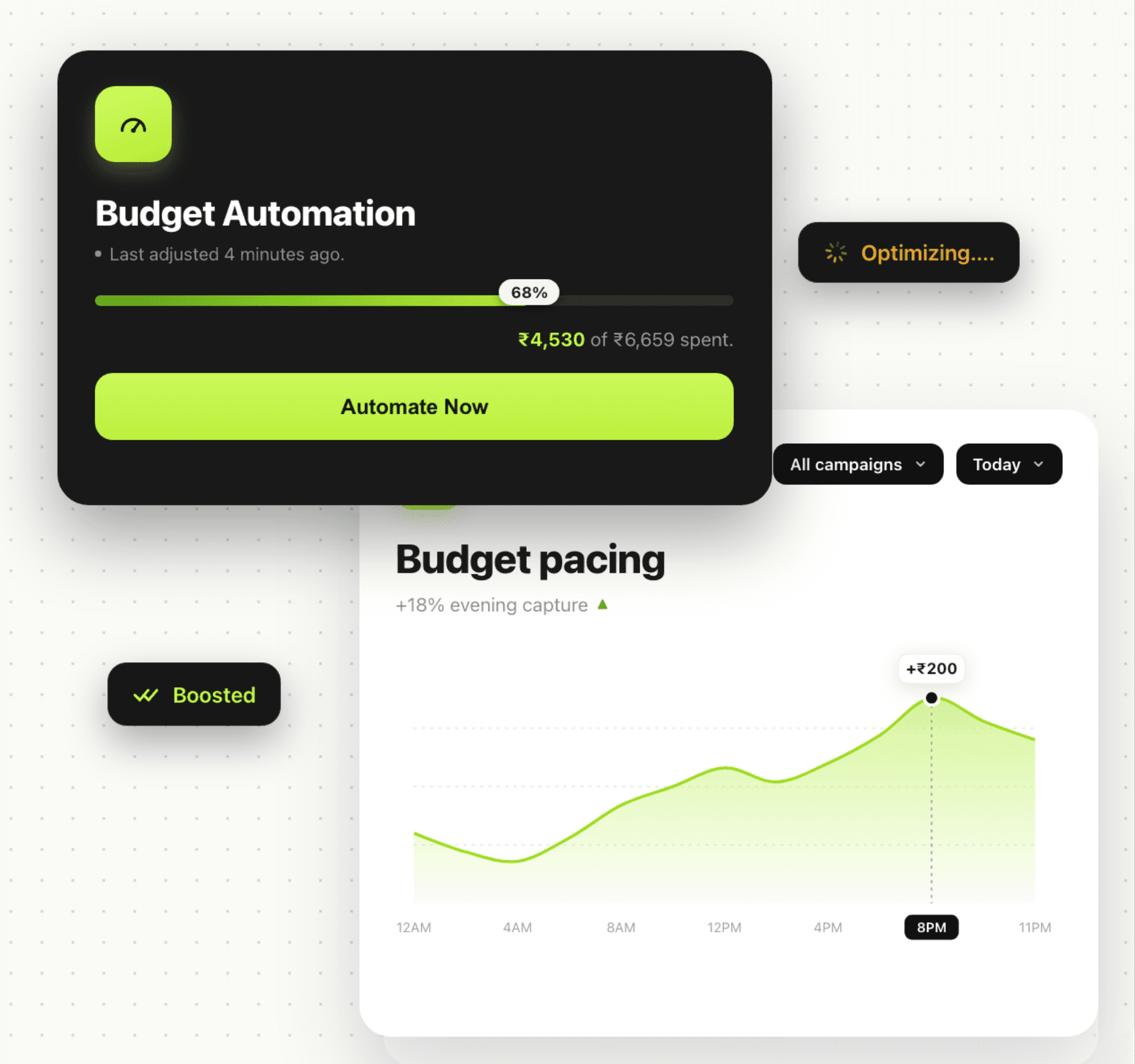
Hourly budget automation in Sapyon AI