
Scaling an Agency Portfolio 5.4× Without Adding Headcount

The problem
Before Sapyon AI, managing multiple product lines manually meant weak products ate up the budget. The best lines ran at about 7.6× ROAS (on more than ₹1 Cr of ad spend), while weaker lines sat closer to 1.3–1.6×.
Editing budgets by hand meant low-ROAS products still ate spend while winners were starved of funds, and growth stalled where it should have compounded. Agencies and in-house teams faced the same issue: too many campaigns, one Friday export ritual, and no shared rules that automatically funded what worked.
What they did
In Sapyon AI, the team set reusable budget and performance rules (ROAS floors, spend pace, and time windows) then applied them across categories instead of guessing campaign by campaign. Ranked recommendations gave managers a clear queue: protect high-ROAS lines, pressure weaker ones, and stop giving every category the same budget.
What changed
After Sapyon AI, automated rules instantly shifted spend to winning products. Sales from ads grew 5.4× in 12 months, while overall spend scaled nearly 5× without collapsing ROAS. Across the full period, the account delivered over ₹9 Cr in total sales from ads at about 6.7× blended ROAS.
If you run Amazon for a multi-product brand, or an agency book that looks like one, this is why rules beat manual edits: winners get funded, waste gets limited, and growth shows up on one dashboard.
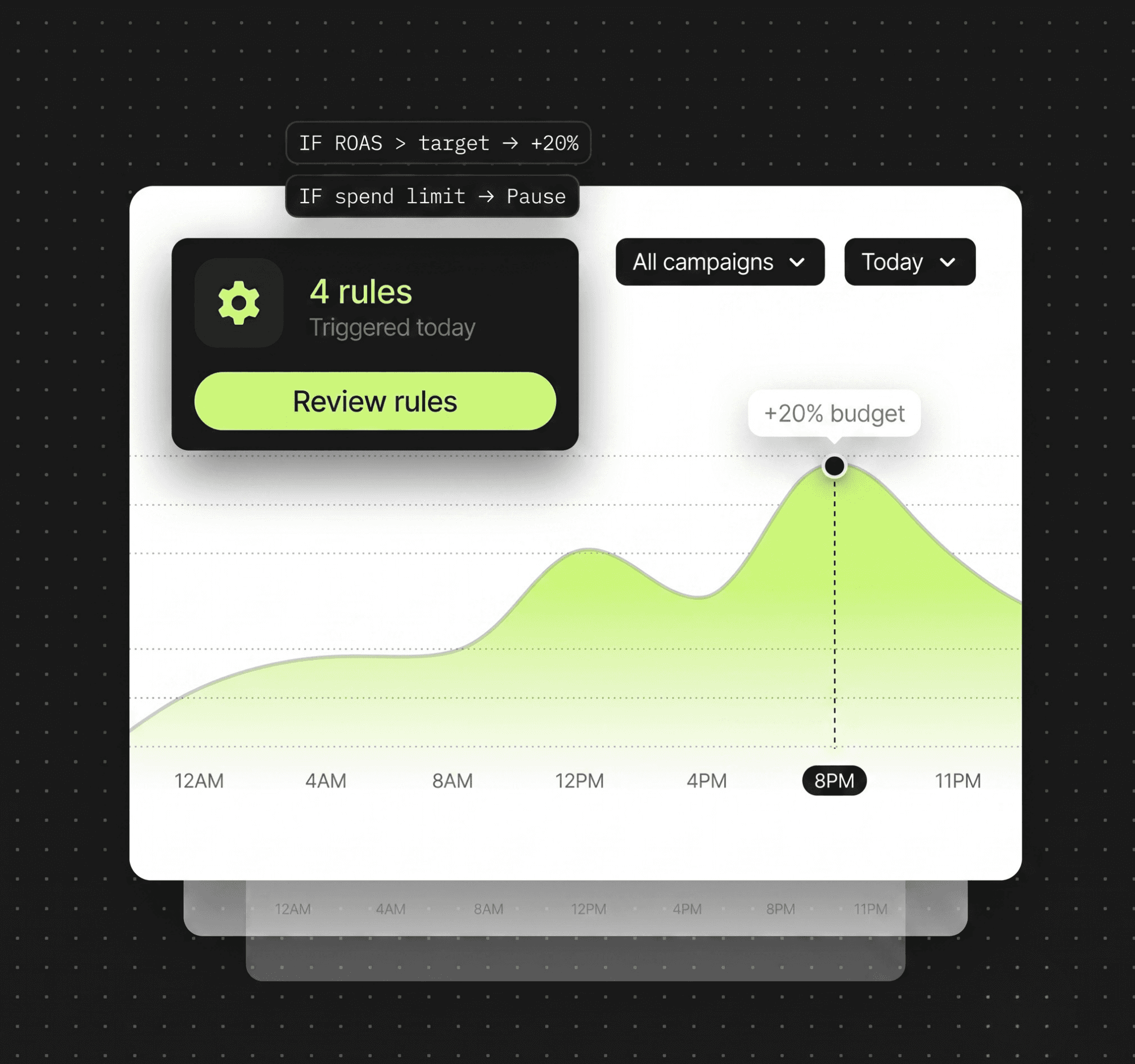
Budget rules management in Sapyon AI